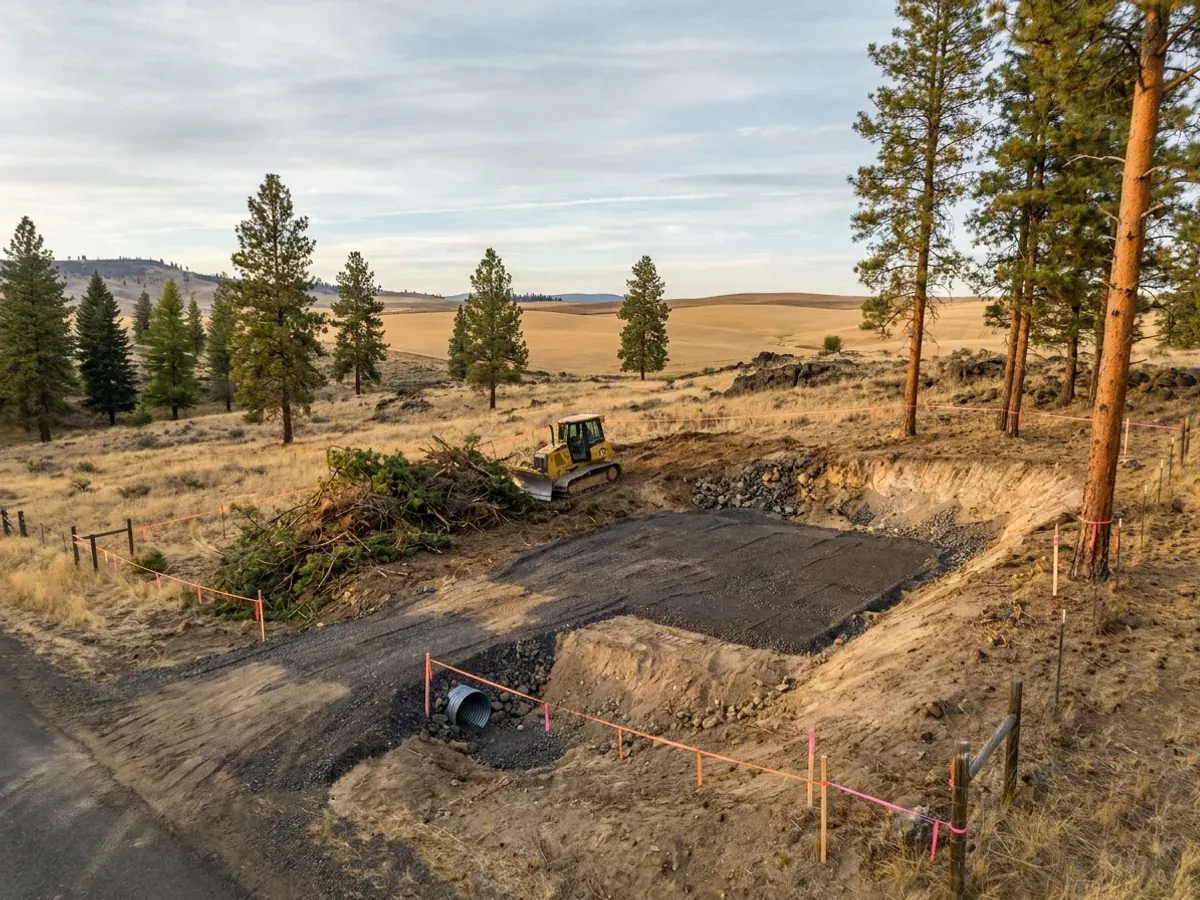
Barndominium Site Preparation in Washington State
Site preparation is everything between bare land and a foundation: clearing, grading, drainage, the driveway and the building pad. On rural Washington State land it is also where the approvals meet the dirt. The house cannot be permitted without evidence of an adequate water supply, the septic system needs its own permit and a reserve area, and wetlands, streams, steep slopes or a shoreline can move where everything goes. We prepare the site after those questions are answered, not before.
Water, Septic and Wetlands Before the Dirt
The first job on a rural site is not a bulldozer. It is working out where things can go. Washington requires evidence of an adequate water supply before a building permit for a house is issued, so the water source is settled early: a connection to a water system where one can serve the lot, or a well drilled by a licensed well driller you hire. A domestic well can be exempt from a water right permit up to 5,000 gallons a day, but in Streamflow Restoration watersheds a new home on a new permit-exempt well pays a fee, has a lower annual-average cap, and the limit is recorded on the title. The county tells you which rules apply to your parcel.
The septic system comes next. Off sewer, a permit from the local health officer is needed before construction, based on a soil and site evaluation and a design that reserves room for a replacement drainfield. The on-site sewage rules also set minimum separation distances between a well and the septic tank, drainfield and reserve area, and the local health officer can require more on permeable or shallow soils. Because the well, the drainfield, the reserve area and the house all have to fit together, they are sited as one plan.
Then the land itself. Wetlands, streams, floodplain and steep or unstable slopes on or near a lot can limit where the house, the drive and the septic system go, and the county may ask for a study before it issues a permit. Land within 200 feet of the ordinary high water mark of a regulated shoreline also falls under the county or city shoreline master program. All of it is found before any clearing starts.
West-Side Rain, East-Side Dryland and Snow
NOAA's climate summary for Washington describes a state split by the Cascades: frequent precipitation on the west side, with parts of the Olympic Peninsula receiving upwards of 150 inches a year, and much drier country east of the mountains, where areas along the Columbia River average under 10 inches. Most of the state's precipitation falls in winter. Site work follows that split.
West of the Cascades, the work is about water. Saturated ground will not carry trucks, so drives and staging pads are rocked before the wet months, the pad is built up and compacted, and runoff is directed away from the building and the drainfield. Erosion and sediment controls go in before the ground is opened, and your county's clearing, grading and stormwater rules apply to the work. East of the Cascades, the ground is often drier and easier to work, but frost depth, snow access and wind-blown soil shape the job, and the drive has to work in winter.
Site Preparation: how the work runs
Four stages, in this order. The sequence matters more than it looks: on rural Washington land, settling the water supply, the septic permit and the building permit before anything is fabricated is what keeps a build from stalling.
Site walk and layout
We walk the land and lay out the house, the drive, the well, the septic area and its reserve, and any buffers, so each fits the others before any clearing is done.
Clearing and erosion control
Trees and brush are cleared only where the plan needs it, and erosion and sediment controls go in before the ground is opened, especially on west-side sites heading into the wet season.
Grading, drainage and drive
The pad is graded and compacted, drainage is shaped to carry water away from the building and the drainfield, and the drive is built to carry delivery trucks and, on the east side, to work in snow.
Ready for the foundation
The pad is checked for level and compaction and the foundation is laid out on it. The well driller and the septic installer work to their own permits and schedules, and the site is left ready for both.
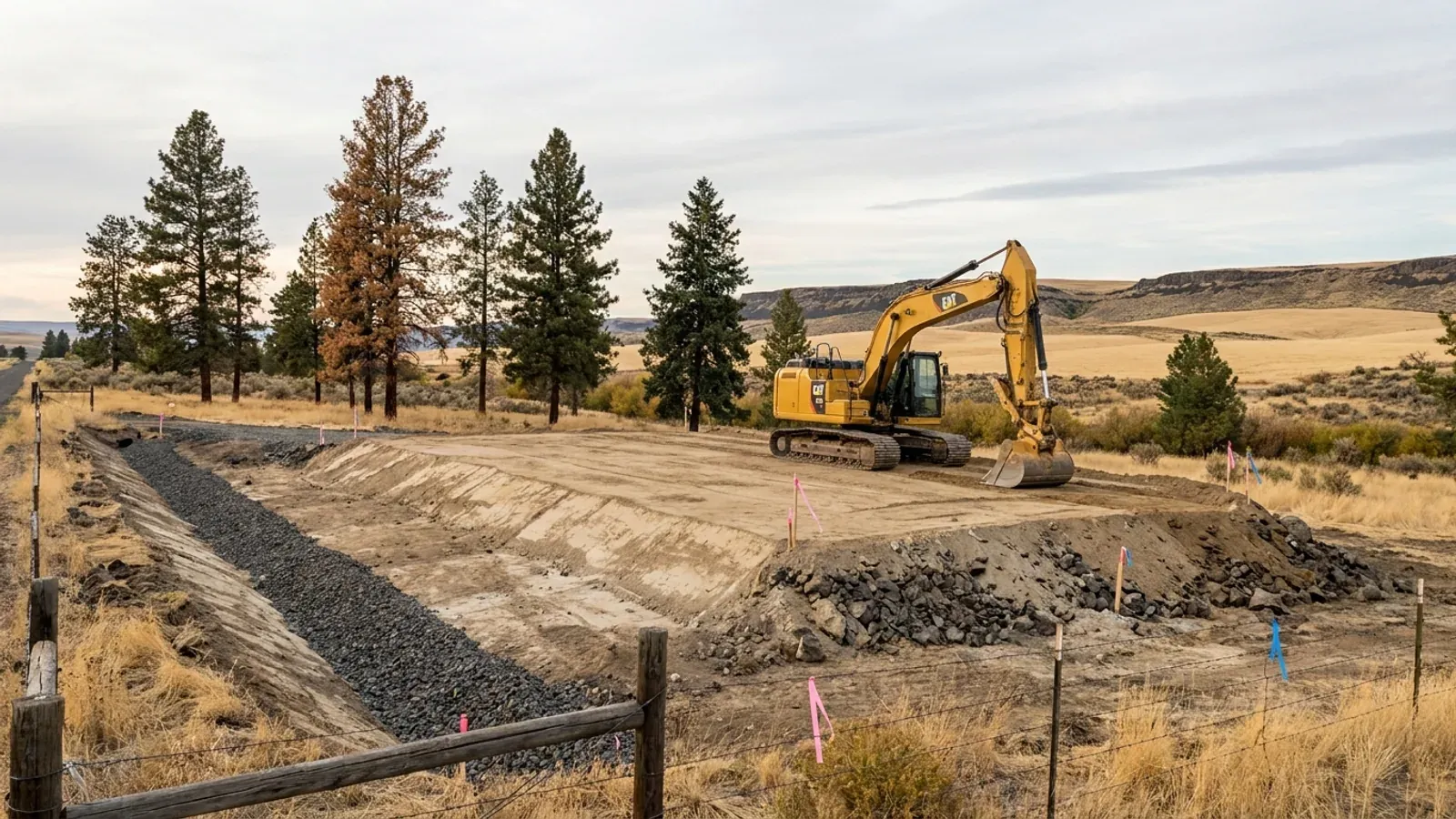
The well and the drainfield are sited together, or not at all
The on-site sewage rules set minimum distances between a well and the septic tank, drainfield and reserve area, and the local health officer can require more on permeable or shallow soils. On a small rural lot that can decide where the house goes, so the well, the septic area and the house are placed as one plan before the site is cleared.
Where we deliver site preparation
In Washington the first line that matters is usually a city limit. Cities and counties enforce the state building code and issue residential building permits: usually the city building department inside city limits and the county in unincorporated land, where most barndominiums are built and where the county's comprehensive plan sets rural densities. The state building code is the same on both sides of every line. What changes is the zoning, the snow, wind, frost and seismic values the jurisdiction sets, the local health jurisdiction that permits the septic system, and how the house shows an adequate water supply.
Barndominium builders across Washington State.
Every city and county has its own answer on permits, septic and water. The service area pages set out what each one publishes.
What actually decides the price
Square footage is the number everyone leads with, and it is rarely the one that moves a barndominium budget. These four do.
-
Clearing
Wooded west-side lots can need significant clearing, stump removal and hauling. Open east-side ground usually needs far less.
-
Slope and fill
A sloped lot needs cut and fill to make a level pad, and sometimes retaining walls. Imported fill and compaction are a large part of site cost on uneven ground.
-
Drive length and access
A long drive to the building site, built to carry loaded trucks, can cost as much as the pad. On the east side it also has to be usable in snow.
-
Drainage and stormwater
Wet sites need drainage and erosion control, and wetland or stream buffers can lengthen drives or move the pad.
Site Preparation in Washington: common questions
8 questions we get asked most often about building in Washington. If yours is not on the list, ask it directly.
Do you drill wells or design septic systems?
How far does a well have to be from a septic system?
Do I need a water right for a well for my house?
What if the land has wetlands or steep slopes?
Does a permit-exempt well guarantee a building permit?
Can you build near a lake, river or the Sound?
When should site work happen on the west side?
How do you find the right land for a barndominium?
Sources
- RCW 19.27.097, Building permit application: evidence of adequate water supply — Washington State Legislature
- RCW 90.44.050, Permit-exempt groundwater withdrawals — Washington State Legislature
- RCW 90.94.030, Streamflow restoration: permit-exempt domestic withdrawals (WRIAs 7 to 10 and 12 to 15) — Washington State Legislature
- Wells: well construction and licensing — Washington State Department of Ecology
- Streamflow restoration — Washington State Department of Ecology
- WAC 246-272A-0210, On-site sewage system location and setbacks — Washington State Legislature
- WAC 246-272A-0200, On-site sewage system permits — Washington State Legislature
- Hiring a Septic System Professional — Washington State Department of Health
- RCW 90.58.030, Shoreline Management Act definitions — Washington State Legislature
- Shoreline management — Washington State Department of Ecology
- State Climate Summaries 2022: Washington — NOAA National Centers for Environmental Information
Keep reading
The pages that answer the next question this one raises.
Ready to put site preparation against a real plan? Start there and the rest follows.
Tell us about the land
Tell us where the parcel is and what you want on it, and we will come back with who has jurisdiction, what the land needs before it can be built on, and a realistic budget range. Starting the survey costs nothing.